Explore our network of country and industry based websites to access localized information, product offerings, and business services across our group.

Access reliable chemical market information through our update channels.
Real-time Updates
Daily Updates
Log in to start sending quotation requests for any product.
Don't have an account? Sign Up Here
Log in now to access technical product documents from our product range.
Don't have an account? Sign Up Here
Home All Products Sodium Metasilicate
|
IUPAC Name |
: Sodium Metasilicate |
|
Cas Number |
: 6834-92-0 |
|
HS Code |
: - |
|
Formula |
: Na2O3Si |
|
Appearance Name |
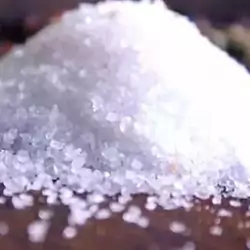
: White Powder |
|
Common Names |
: Sodium Metasilicate Pentahydrate, Pentahydratemeta |
|
Packaging |
: 25 Kg Bag |
For more detailed information including pricing, customization, and shipping:
Brief Overview
Sodium Metasilicate (Na2SiO3) is one of the silicate compounds that can dissolve in water. Mestasilicate Sodium is made by reacting Sodium Carbonate (Na2CO3) and Silica Sand (SiO2) in a furnace. The use of Sodium Metasilicate (Na2SiO3) in the chemical industry can be said to be quite extensive. Some of the uses of Sodium Metasilicate (Na2SiO3) include the manufacture of silica gel, catalysts, metal cleaners and various other chemical industries. Sodium Metasilicate (Na2SiO3) is a white solid with a molecular weight of 122.06, a melting point of 1088°C and a density of 2.4 g/cm3.
Manufacturing Process
The manufacture of Sodium Silicate for industrial scale was initiated by the study of Johan Nepomuk Von Fuch, Munich Professor of Minerology. This research began in 1828 by dissolving silica sand and caustic soda. Kuhlman started the Sodium Silicate industry in 1841 in France. In 1863 Sodium Silicate was produced in America after Elkington patented his furnace. In England Gossage started using Sodium Silicate to improve soap products and industrial-scale Sodium Silicate products started in Widnes in 1854.
Detergent Industry
a.It has the strong capability of cleaning, widely used for the manufacture of a variety of detergents in detergent industry, so it is the best substitute for STPP, reducing environmental pollution.
b. Sodium metasilicate provides anti-corrosion protection to metals (zinc, aluminium, etc.) and is used as metal cleaner and metal surface treatment agents.
Textile Industry
Mainly used as printing and dyeing auxiliaries, fabric pre-treatment agent and as detergents in cooking and dyeing cotton yarn.
Ceramic Industry
Used for sludge thinners. It is especially suitable for additives used in slip-casting forming and ceramic forming.
Oil Industry
Enhanced oil recovery and refining of natural oils
Cement Industry
Refractory and acid resistant cement
Water Treatment Industry
It has purifying, emulsifying, dispersing, moistening, permeating and PH buffering abilities
Paper Industry
Used as paper coatings



 English

 Indonesian
 简体字
简体字
 العربية
 Español
 Français
 Português
 日本語
日本語
 한국어
한국어
 Tiếng Việt




















---india.webp)