Explore our network of country and industry based websites to access localized information, product offerings, and business services across our group.

Access reliable chemical market information through our update channels.
Real-time Updates
Daily Updates
Log in to start sending quotation requests for any product.
Don't have an account? Sign Up Here
Log in now to access technical product documents from our product range.
Don't have an account? Sign Up Here
Home All Products Mimosa Extract
|
IUPAC Name |
: - |
|
Cas Number |
: 93685-96-2 |
|
HS Code |
: - |
|
Formula |
: - |
|
Appearance Name |
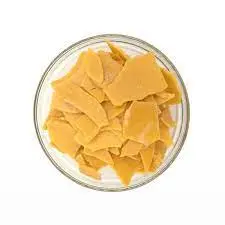
: Yellowish-brown powder |
|
Common Names |
: Mimosa Extract, Mimosa Tannin Extract, Acacia Tann |
|
Packaging |
: 25 kg woven polypropylene bags with polyethylene inner liners. |
For more detailed information including pricing, customization, and shipping:
Brief Overview
Mimosa extract is a natural, tannin-rich substance derived from the bark or leaves of Mimosa species (most common Mimosa tenuiflora). It does not exist as a single, pure chemical entity but rather as a complex mixture of polyphenolic compounds that impart excellent tanning properties. Variability in the source material and extraction methods leads to differences in color, solubility, and tannin content, which are critical to its performance in leather processing and cosmetic applications.
Manufacturing Process
Method 1: Solvent Extraction
Dried plant material (bark or leaves) is finely ground and mixed with a suitable solvent such as water, ethanol, or a water–ethanol blend. The solvent extracts the active tannins from the material. After extraction, the mixture is filtered to remove solid residues. The filtrate is then concentrated, often using reduced pressure, and finally dried (via spray-drying or freeze-drying) to produce a uniform powder.
Method 2: Supercritical CO₂ Extraction
In advanced applications, supercritical CO₂ is used to extract the tannin-rich fraction from the plant material. This process involves placing the dried, ground material in an extraction vessel and exposing it to CO₂ under supercritical conditions, which selectively isolates the desired compounds. The extract is then purified and dried to yield a high-purity powder with consistent properties.
Both methods are designed to maximize the recovery of tannins while maintaining the integrity of the extract, making mimosa extract a versatile ingredient in industrial tanning and cosmetic formulations.
Leather Tanning:
Mimosa extract is widely used in the leather tanning industry, particularly in vegetable tanning and retanning processes. Its high tannin content enables it to act as an effective tanning agent, promoting uniform penetration into the hide, reducing processing time, and enhancing the overall quality of the leather by improving its softness, durability, and color stability.
Textile Dyeing & Printing:
Mimosa extract can also be applied in textile processing. In dyeing and printing, it aids in improving color brightness and fastness, ensuring more vibrant and lasting hues on fabrics.



 English

 Indonesian
 简体字
简体字
 العربية
 Español
 Français
 Português
 日本語
日本語
 한국어
한국어
 Tiếng Việt