Explore our network of country and industry based websites to access localized information, product offerings, and business services across our group.

Access reliable chemical market information through our update channels.
Real-time Updates
Daily Updates
Log in to start sending quotation requests for any product.
Don't have an account? Sign Up Here
Log in now to access technical product documents from our product range.
Don't have an account? Sign Up Here
Home All Products Cocamidopropyl Betaine
|
IUPAC Name |
: 2-[(3-dodecanoylamino)propyl(dimethyl)ammonio]acetate |
|
Cas Number |
: 61789-40-0 |
|
HS Code |
: 34021900 |
|
Formula |
: C19H38N2O3 |
|
Appearance Name |
: Clear Light Yellow Green Liquid |
|
Common Names |
: Cocamidopropyl betaine (CAPB) |
|
Packaging |
: 200 Kg HDPE Drums |
For more detailed information including pricing, customization, and shipping:
Brief Overview
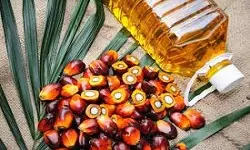
Cocamidopropyl betaine, also known as coco amido propyl betaine and CAPB, is a coconut-derived, sticky, yellow liquid with a slightly "fatty" odor. The name reflects the fact that the molecule's major component, the lauric acid group, is derived from coconut oil. Cocamidopropyl betaine has largely supplanted cocamide DEA.
Manufacturing process
Despite the name cocamidopropyl betaine, the molecule is not synthesized from betaine. Instead it is produced in a two step manner, beginning with the reaction of dimethylaminopropylamine (DMAPA) with fatty acids from coconut or palm kernel oil (lauric acid, or its methyl ester, is the main constituent). The primary amine in DMAPA is more reactive than the tertiary amine, leading to its selective addition to form an amide. In the second step chloroacetic acid reacts with the remaining tertiary amine to form a quaternary ammonium center (a quaternization reaction).[3]
CH3(CH2)10COOH + H2NCH2CH2CH2N(CH3)2 → CH3(CH2)10CONHCH2CH2CH2N(CH3)2
CH3(CH2)10CONHCH2CH2CH2N(CH3)2 + ClCH2CO2H + NaOH → CH3(CH2)10CONHCH2CH2CH2N+(CH3)2CH2CO2− + NaCl + H2O
Detergent Industry
Many detergents are drying to hair or skin. Cocamidopropyl betaine contains coconut oil, which is hydrating. It's less drying than other surfactants. Cocamidopropyl betaine reduces the drying effects of harsher detergents in skin and hair care products. Personal Care Industry From shampoo to soaps, toothpaste, shaving cream, makeup removers, body wash, detergents, and cleaners, cocamidopropyl betaine is most typically used to create rich, thick lather in foaming products. Pharmaceutical Industry The foaming and thickening property are used to create stable solutions of pharmaceutical products. Furthermore, the chemical is stable under acidic and alkaline solutions. The chemical also has conditioning properties and compatible with other surfactants.



 English

 Indonesian
 简体字
简体字
 العربية
 Español
 Français
 Português
 日本語
日本語
 한국어
한국어
 Tiếng Việt



















---india.webp)