Explore our network of country and industry based websites to access localized information, product offerings, and business services across our group.

Access reliable chemical market information through our update channels.
Real-time Updates
Daily Updates
Log in to start sending quotation requests for any product.
Don't have an account? Sign Up Here
Log in now to access technical product documents from our product range.
Don't have an account? Sign Up Here
Home All Products Caustic Soda Flakes
|
IUPAC Name |
: Sodium hydroxide |
|
Cas Number |
: 1310-73-2 |
|
HS Code |
: 2815.11.00 |
|
Formula |
: NaOH |
|
Appearance Name |
: White Flakes |
|
Common Names |
: anhydrous caustic soda , caustic alkali , caustic flake , caustic soda, solid , caustic white , caustic, flaked , hydrate of soda , hydroxide of soda , LEWIS red devil lye , soda lye , sodium hydrate , sodium hydroxide, pellets |
|
Packaging |
: 25 Kg Bag |
For more detailed information including pricing, customization, and shipping:
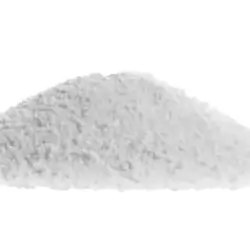
Caustic soda flakes, also referred to as sodium hydroxide flakes, are solid, white materials characterized by a crystalline structure. They exhibit strong hygroscopic properties, meaning they readily absorb moisture from the atmosphere. When dissolved in water, caustic soda flakes completely dissolve, producing a highly corrosive soda lye and generating substantial heat in the process. For businesses and industries, partnering with a reliable caustic soda supplier is essential to ensure the quality and purity of the caustic soda flakes, meeting specific requirements for various applications.
There are few methods of the manufacturing process or how to make caustic flakes, which by metathesis reaction and chloralkali process.
By reacting sodium carbonate with calcium hydroxide, sodium hydroxide, and calcium carbonate is produced. These products can be easily separated by filtration as calcium carbonate is not soluble whereas sodium hydroxide is highly soluble. The solution will then be purified, processed, and standardized for industrial consumption.
With the electrolysis of sodium chloride solution, solid sodium hydroxide is manufactured and obtained with the evaporation of water. Chlorine gas is also produced as the main by-product. This is done through three main types of cells, mainly mercury cell, diaphragm cell, and the membrane cell.
It is used in the pulp and paper industry during the cooking process and oxygen delignification process.
It is employed in the textile industry during the scouring process, mercerization process, and dyeing process.
It is applied during the saponification process in soap industries and neutralization process in detergent industries.
It is used to extract alumina from bauxite ore via the Bayer process.
Caustic soda is employed in the production of a wide array of organic and inorganic chemicals, oil drilling and petroleum products, bio-diesel production, environmental protection, pharmaceuticals, and more. Engaging with a reliable caustic soda distributor is crucial for these diverse industries to maintain product quality and process efficiency.



 English

 Indonesian
 简体字
简体字
 العربية
 Español
 Français
 Português
 日本語
日本語
 한국어
한국어
 Tiếng Việt