Explore our network of country and industry based websites to access localized information, product offerings, and business services across our group.

Access reliable chemical market information through our update channels.
Real-time Updates
Daily Updates
Log in to start sending quotation requests for any product.
Don't have an account? Sign Up Here
Log in now to access technical product documents from our product range.
Don't have an account? Sign Up Here
Home All Products Calcium Carbonate (Feed Grade)
|
IUPAC Name |
: Calcium carbonate |
|
Cas Number |
: 2836-50-00 |
|
HS Code |
: 2836.50.00 |
|
Formula |
: CaCO3 |
|
Appearance Name |
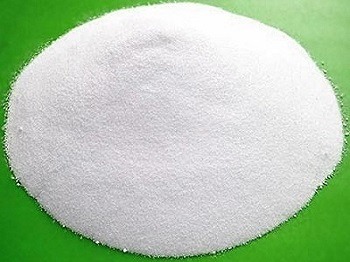
: Fine White Powder |
|
Common Names |
: Aragonite, chalk, or Limestone |
|
Packaging |
: PP-PE Bags or Jumbo Bags 27.5 MT/20ft container |
For more detailed information including pricing, customization, and shipping:
Brief Overview
Calcium carbonate is known by aragonite or limestone come with chemical formula CaCO3. It comprises 4% of the earth’s total crust and is found in egg shells, snails, mineral rocks, pearls, shells of marine organisms and so on. It is an odourless, tasteless powder used in health supplements, agricultural industry, for environmental applications and many more.
Manufacturing Process
Producion of the pure calcium carbonate can be from marble, or by passing carbon dioxide into a solution of calcium hydroxide. In the later case, calcium carbonate is derived from the mixture, forming a grade of product called "precipitated calcium carbonate,” or PCC. A slurry of calcium hydroxide is agitated in a pressurized reactor, and carbon dioxide is provided under pressure to the reactor to produce precipitated calcium carbonate at a high reaction rate. Carbon dioxide is utilized at a high efficiency. Solubilized calcium ions and carbonate ions react to produce a calcium carbonate precipitate. Control of process conditions such as temperature, slurry concentration, and pressure, enables production of a desired crystal habit (including sclenohedral, rhombohedral, stacked rombohedral, or aragonite crystal structures), crystal size, or crystal aspect ratio.
Animal Feed Industry
The feed grade Calcium Carbonate has various applications and benefits, such as:
• a common and economical calcium source for animals
• main function is bone and teeth formation
• prevent calcium deficiency or imbalance which can cause poor growth rates, poor bone development, reduced milk output and milk fever
• facilitates nerve conduction, muscle contraction, blood clotting and immune system activation.



 English

 Indonesian
 简体字
简体字
 العربية
 Español
 Français
 Português
 日本語
日本語
 한국어
한국어
 Tiếng Việt